Menu Close
Overview
Menu Close
DISCOVERY

Project SERVIR GLOBAL AI PLATFORM

Overview

role

Designing the system behind the experience.

Product Designer | UI/UX | Design Systems | AI Product Architecture.

Focus

Human–AI Interaction | Information Architecture | Figma Systems | Scientific UX

STATUS | Under development


I work across product design, UI/UX, information architecture, design-system architecture, system logic, Figma component architecture, agent-readable specifications, API integration, and controlled AI execution, translating human design intent into structured, machine readable standards for emerging AI-driven systems.

context

SERVIR is evolving from independently built regional tools toward a shared ecosystem of modular, interoperable platforms—creating the need for a common experience layer that can scale globally while preserving local relevance and scientific integrity.

Challenge

Create a scalable, AI-centered design system that connects regional workflows through shared standards, APIs, structured component logic, and machine-readable rules—without sacrificing local flexibility, accessibility, or scientific integrity.

Users

Primary users

SERVIR regional hub teams translating Earth observation and geospatial science into locally useful tools, services, and decision-support products.

Wider ecosystem

Government agencies, regional organizations, NGOs, Indigenous peoples, communities, decision-makers, private-sector partners, and households relying on trusted, locally relevant information.

RESEARCH DISCOVERY

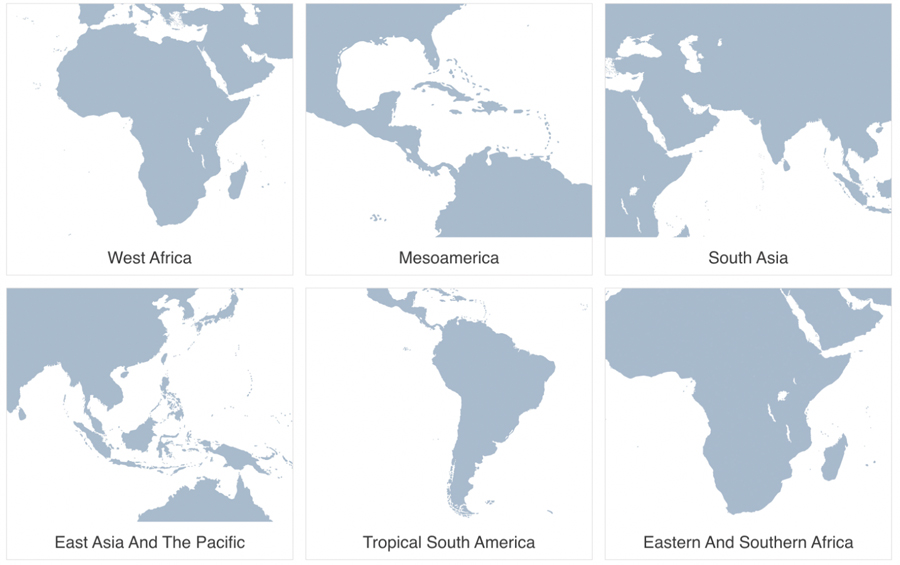
SERVIR serves a highly diverse global network whose languages, cultures, geographies, technical needs, and goals vary by region. Research revealed the need for a system that can maintain shared standards while adapting its content, interface, and workflows to local context.

AI creates the opportunity to make that adaptability dynamic prioritizing relevant information and configuring the experience around regional conditions and objectives, with the ultimate goal of supporting faster, better-informed decisions for people and ecosystems.

System Discovery

I analyzed users, workflows, design-system architecture, scientific communication requirements, accessibility standards, Figma structure, and API constraints to define how the system must work for both humans and AI.
SERVIR Hubs user's regions

Key Insight

AI cannot reliably interpret visual design alone. Design intent must become explicit, structured, and machine-readable through rules, metadata, states, constraints, and governance.

Architecture

System Architecture

A new type of AI-enabled system requires architecture that treats capabilities, constraints, standards, and implementation as part of the design problem from the beginning. I map the requirements connecting the design system, APIs, AI reasoning, accessibility, and governance into a controlled execution model.

Human Architecture

On the human side, the architecture is designed to turn that complexity into an interface people can easily understand, configure, and adapt—giving regional teams meaningful control while AI assists with recommendations, structure, and execution.

Design System

Every component must communicate with both a human and a machine.
Designers need visual guidance, recognizable patterns, and understandable rules. AI systems need structured naming, metadata, properties, constraints, and predictable relationships. I designed both layers together so they remain manifestations of the same source of truth.

Human-ready design system

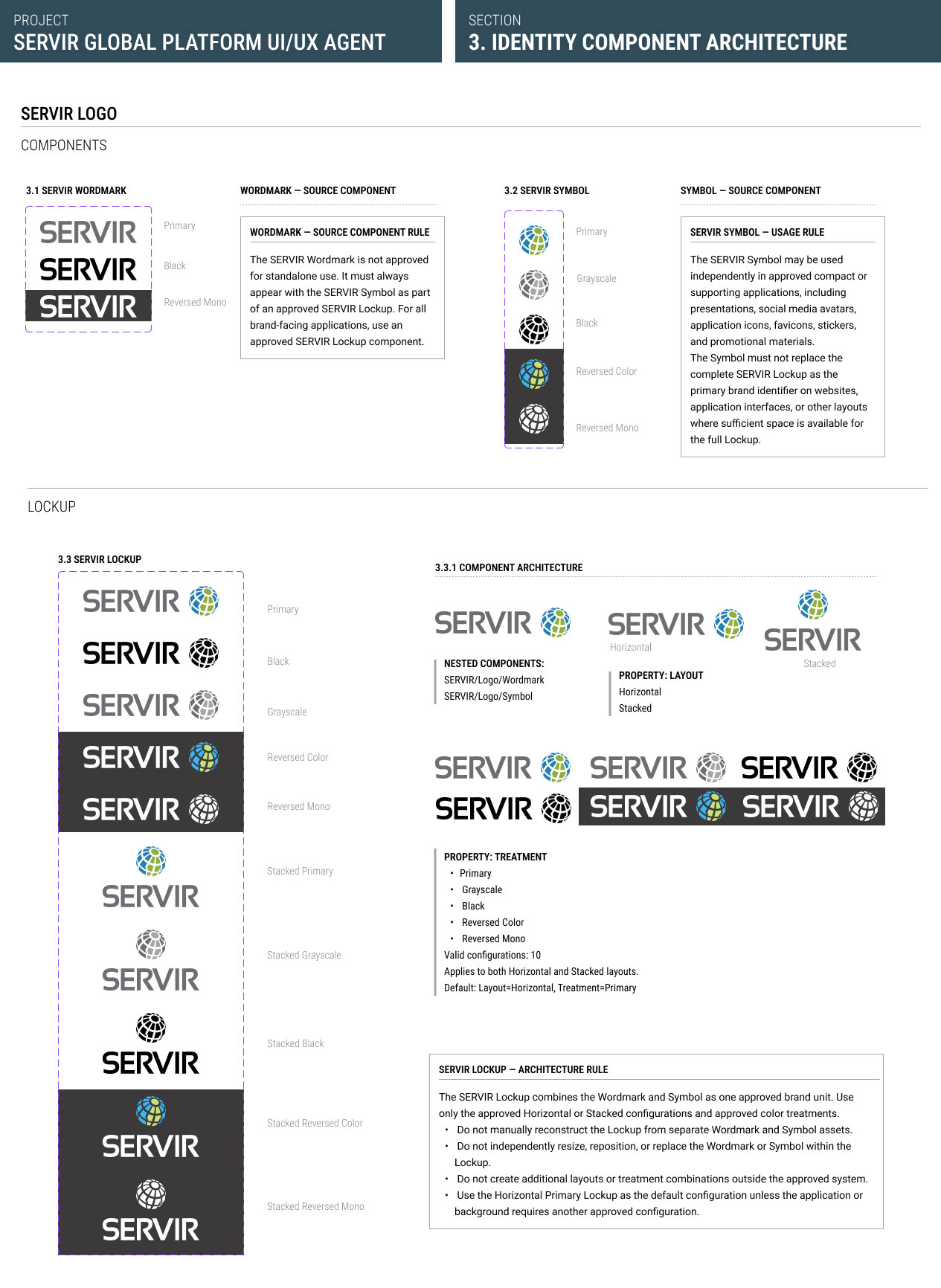
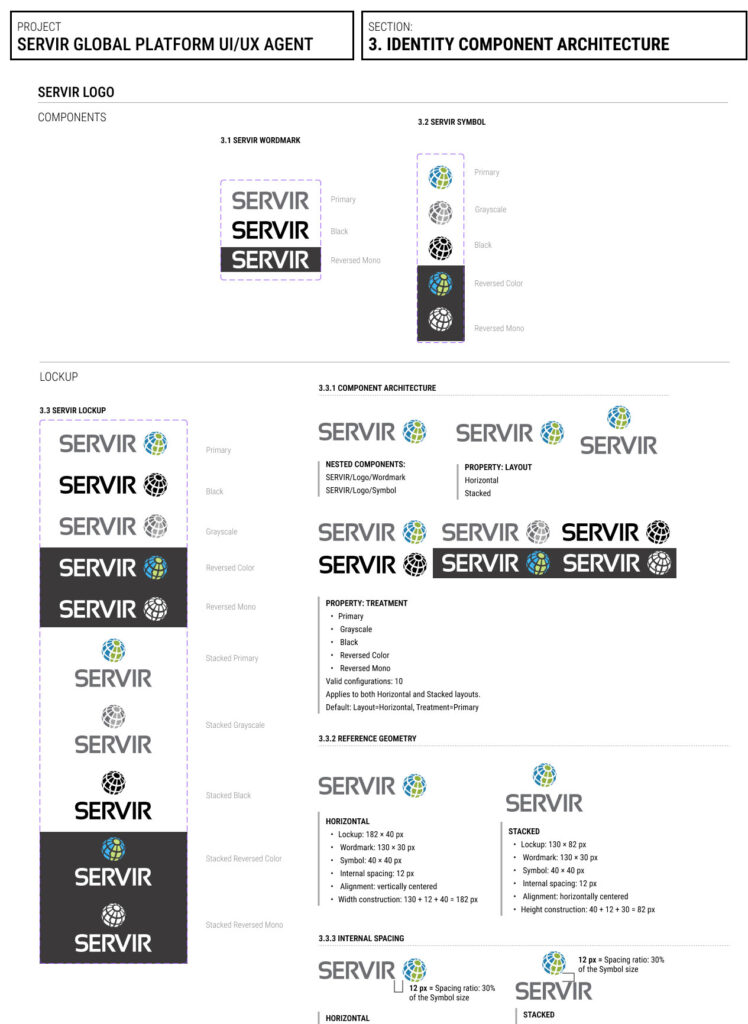
Visual standards translate brand decisions into reusable components, responsive rules, approved configurations, and clear implementation guidance.

Machine-ready architecture

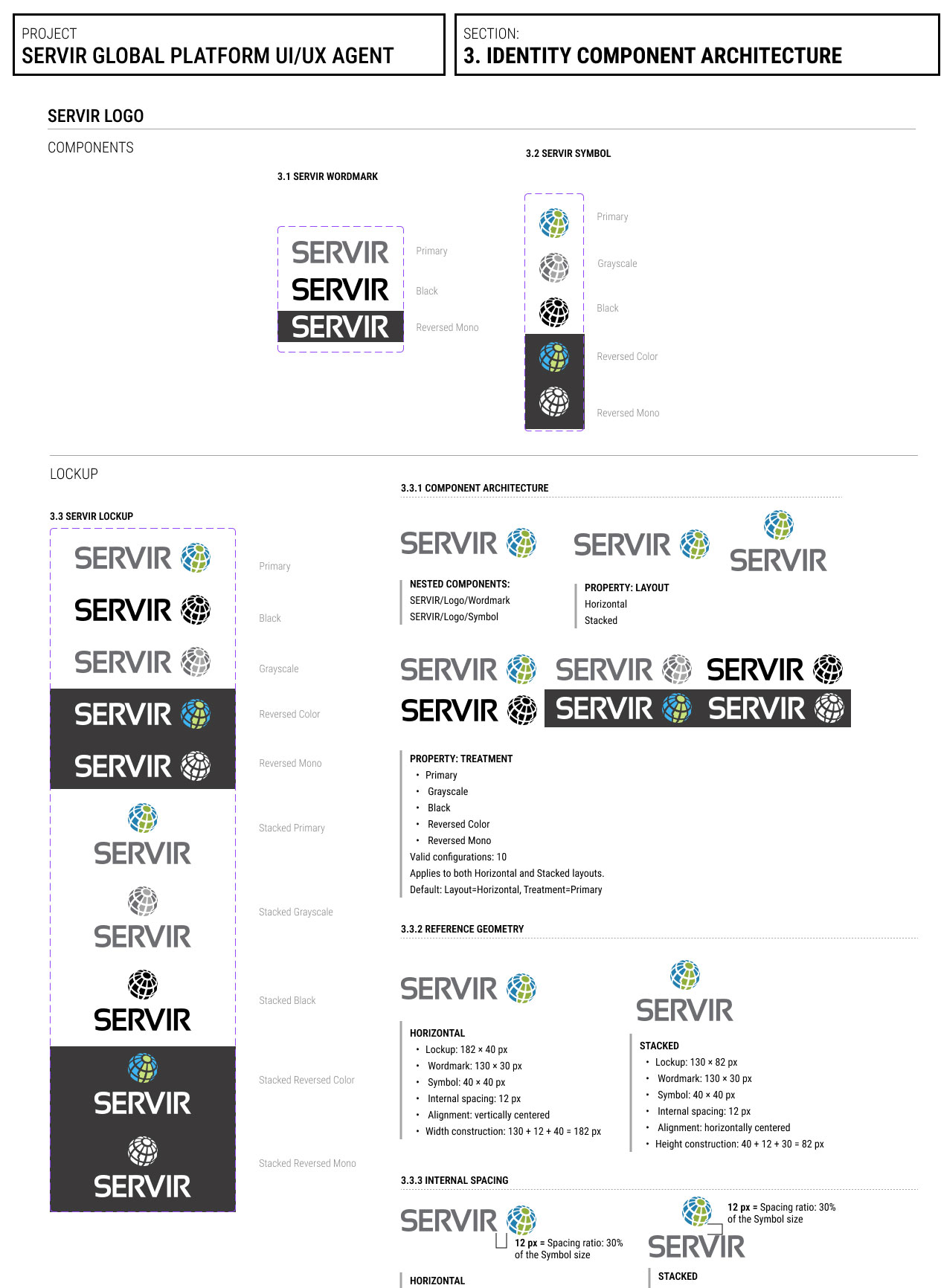
The same visual system is translated into explicit properties, geometry, relationships, constraints, and implementation rules that can be interpreted programmatically.

Agent-readable component metadata

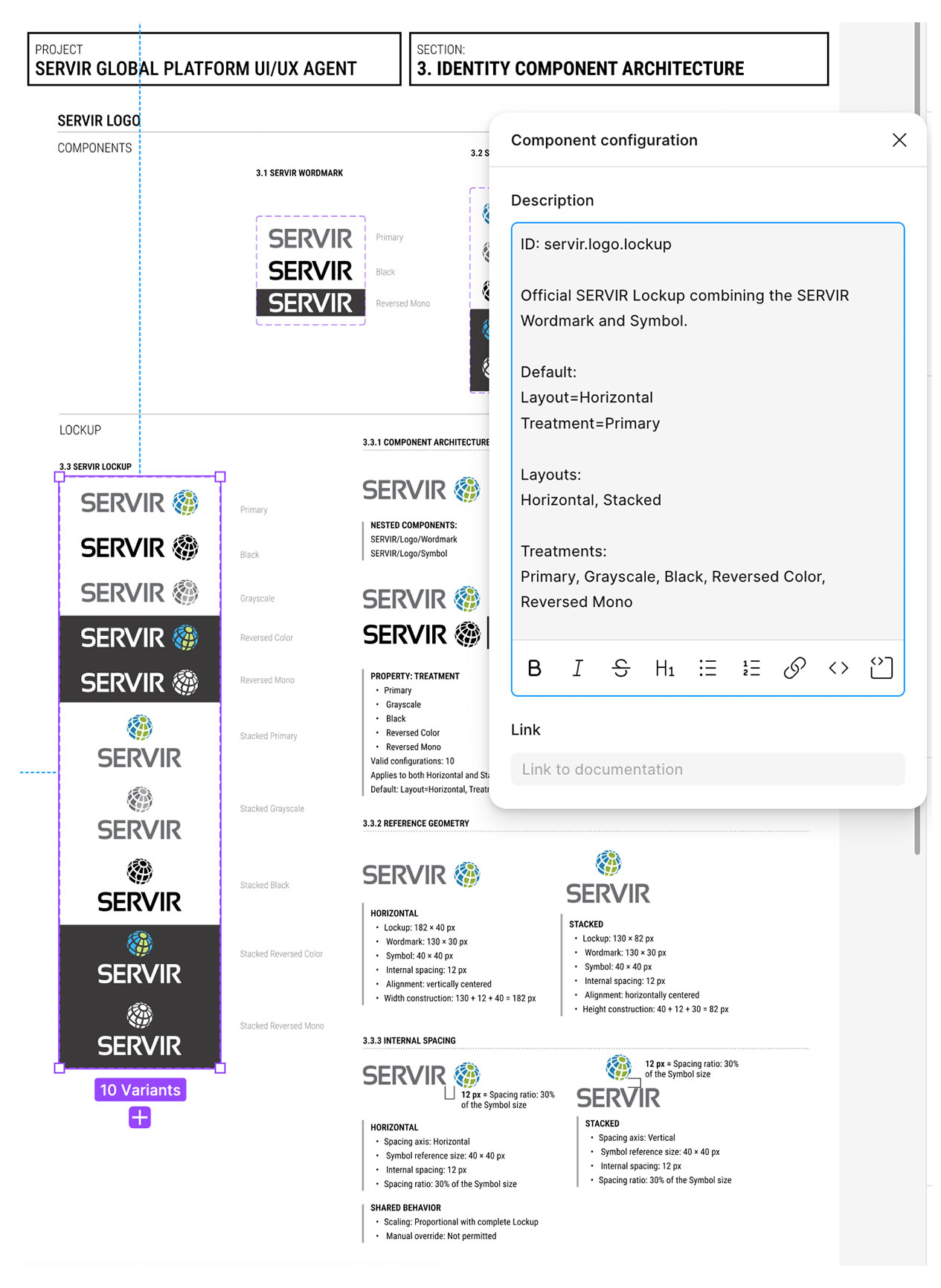
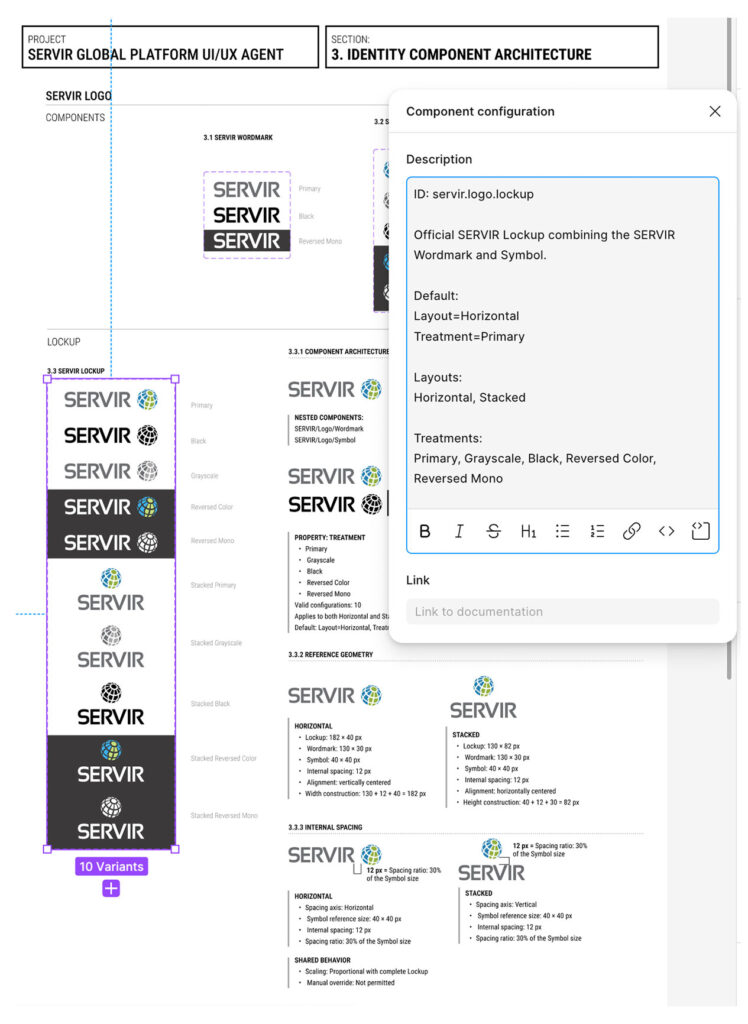
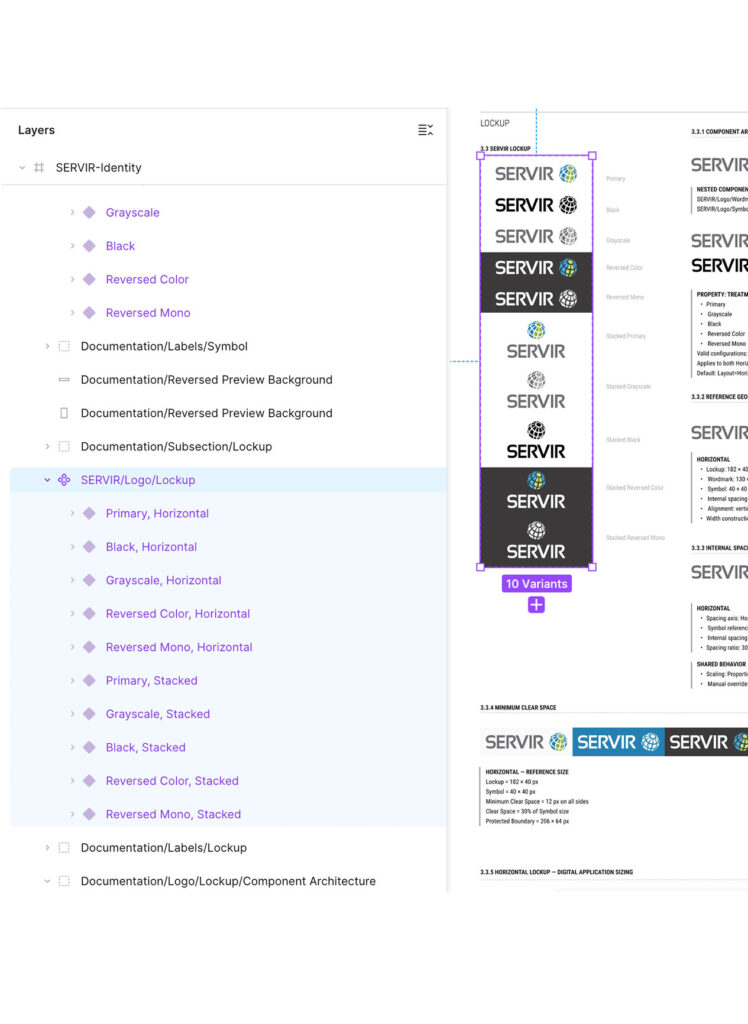
Component intelligence is embedded directly into the design system through structured IDs, purpose, defaults, variants, constraints, geometry, and usage rules, giving AI structured information beyond the visual object itself.

Naming as system architecture

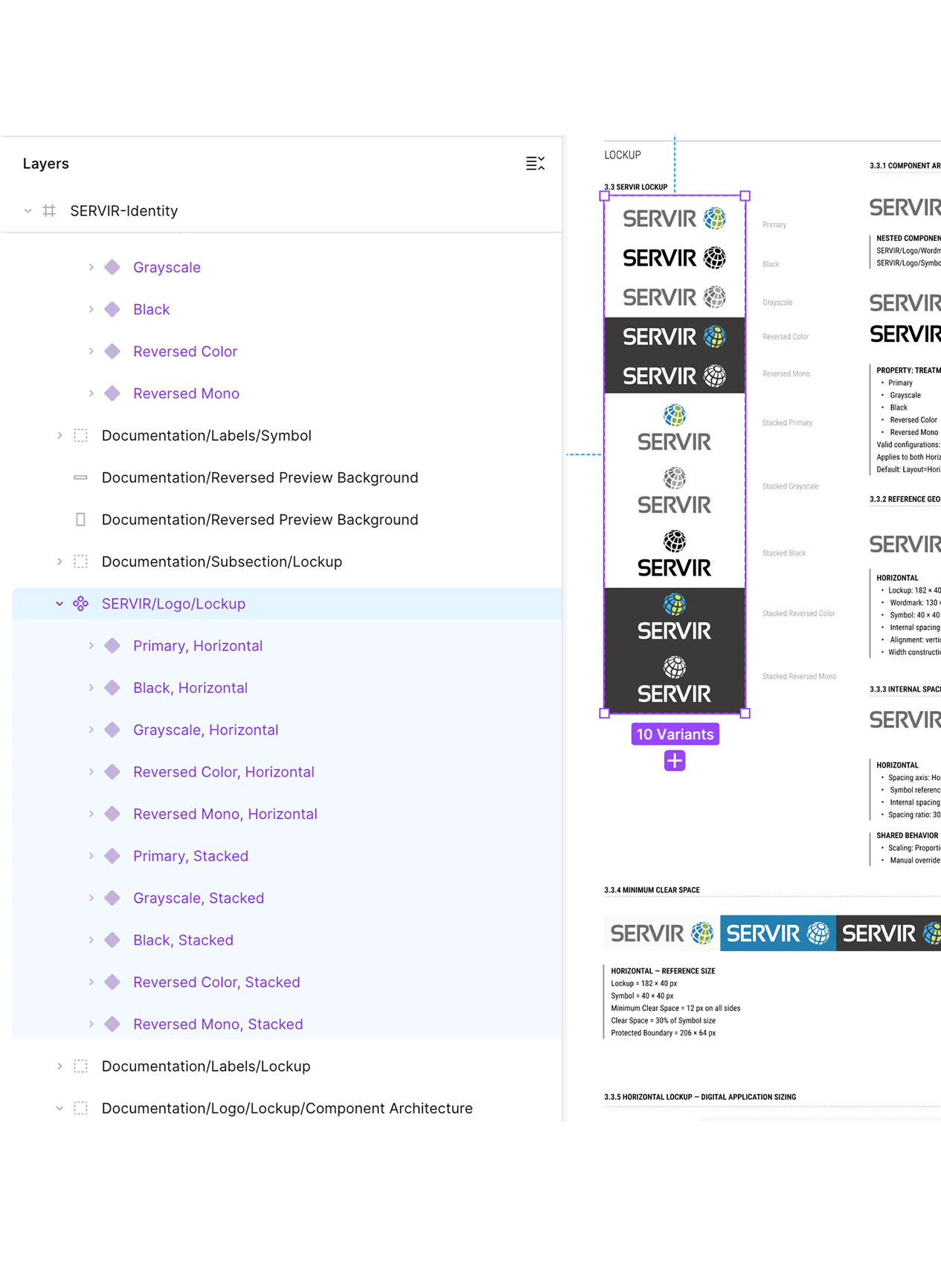
Hierarchical component names and controlled variant terminology create predictable relationships for designers, developers, APIs, and AI-assisted workflows.

Implementation

AI Workspace Recommender

The implementation explores how the design system, AI logic, and regional requirements translate into adaptive interface configurations. Rather than creating one fixed dashboard, I developed prototype directions that demonstrate how the system could recommend layouts, modules, and data priorities based on regional context and workflow goals.

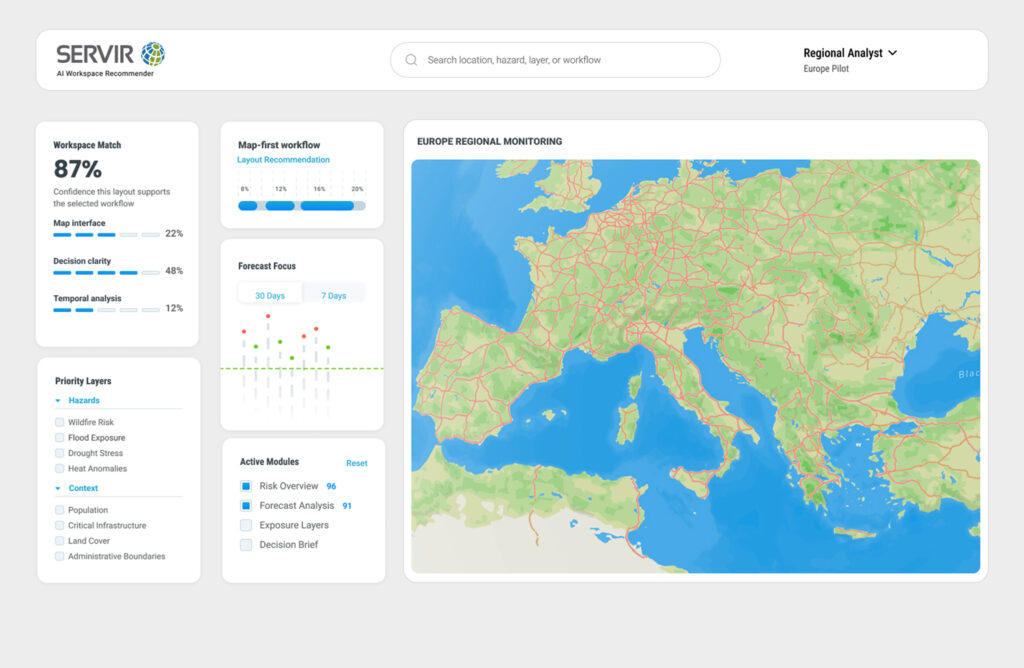
Europe Pilot

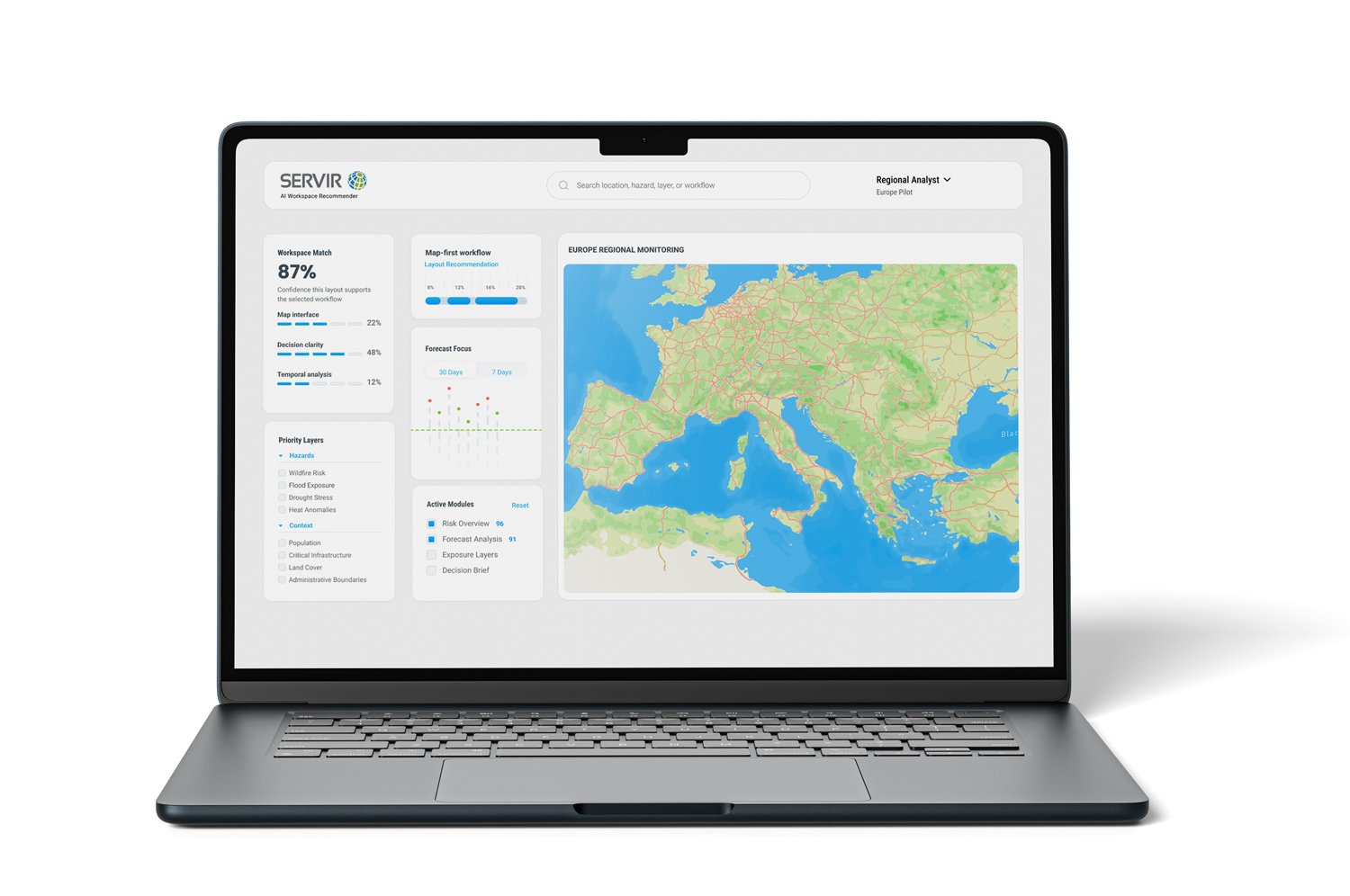
Balanced regional monitoring

A light interface exploring a clear, accessible workspace for broad regional analysis. The AI recommendation emphasizes map visibility, decision clarity, and multi-layer monitoring.

Europe Pilot
Europe Pilot
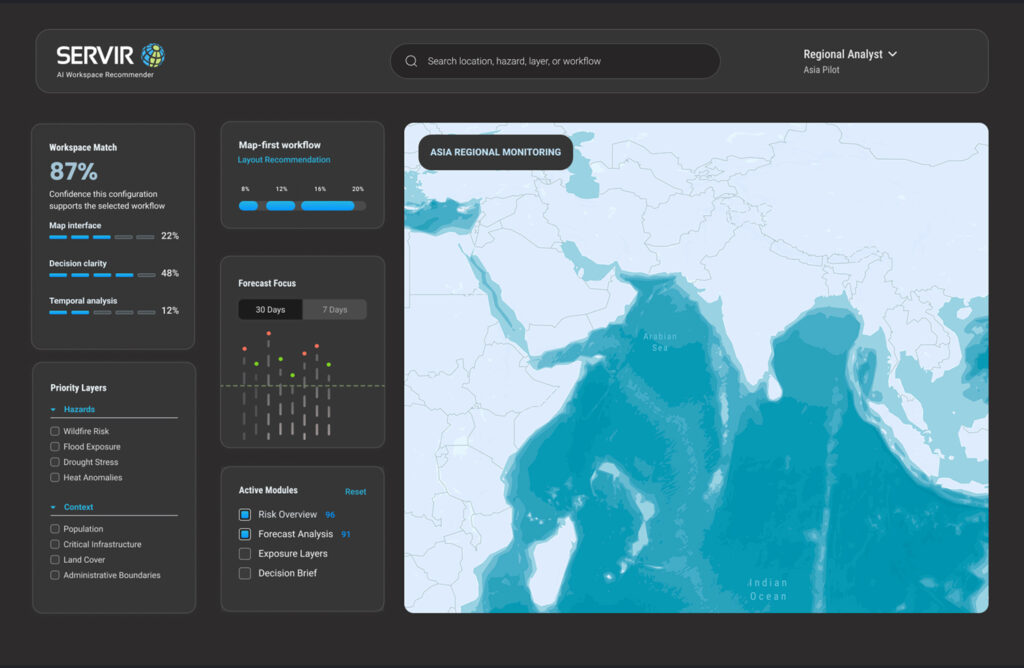
Asia Pilot
Asia Pilot

Asia Pilot

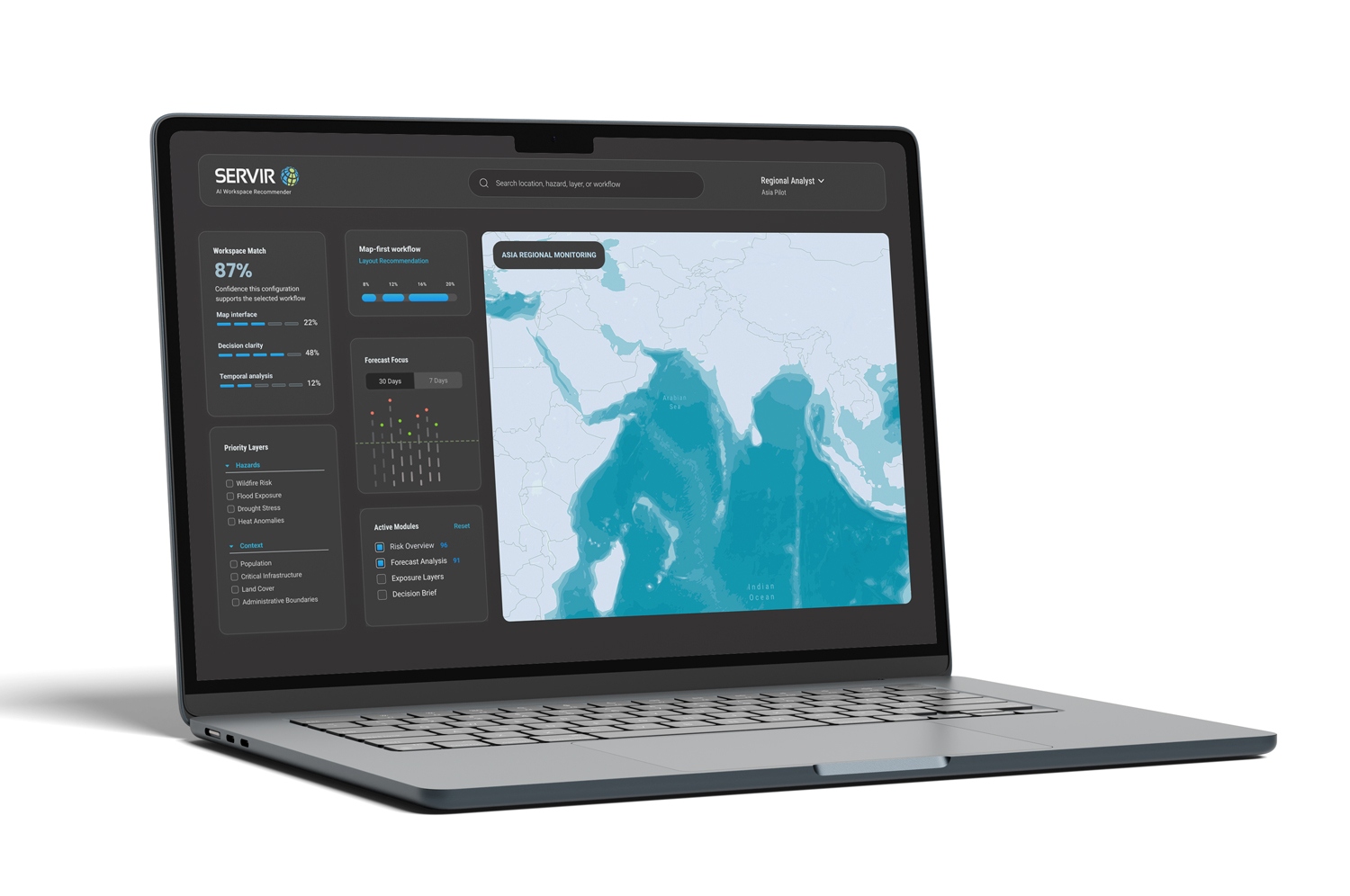
High-contrast regional monitoring

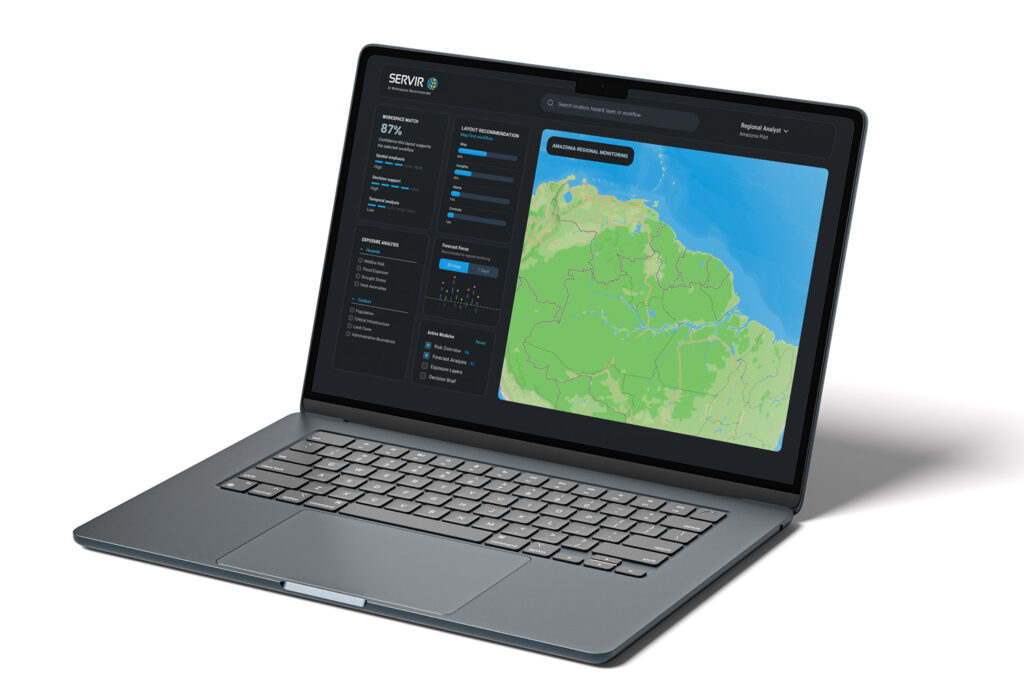
A dark interface designed for sustained analysis across a large geographic area. The layout keeps the map dominant while giving analysts quick access to forecast focus, active modules, and priority layers.

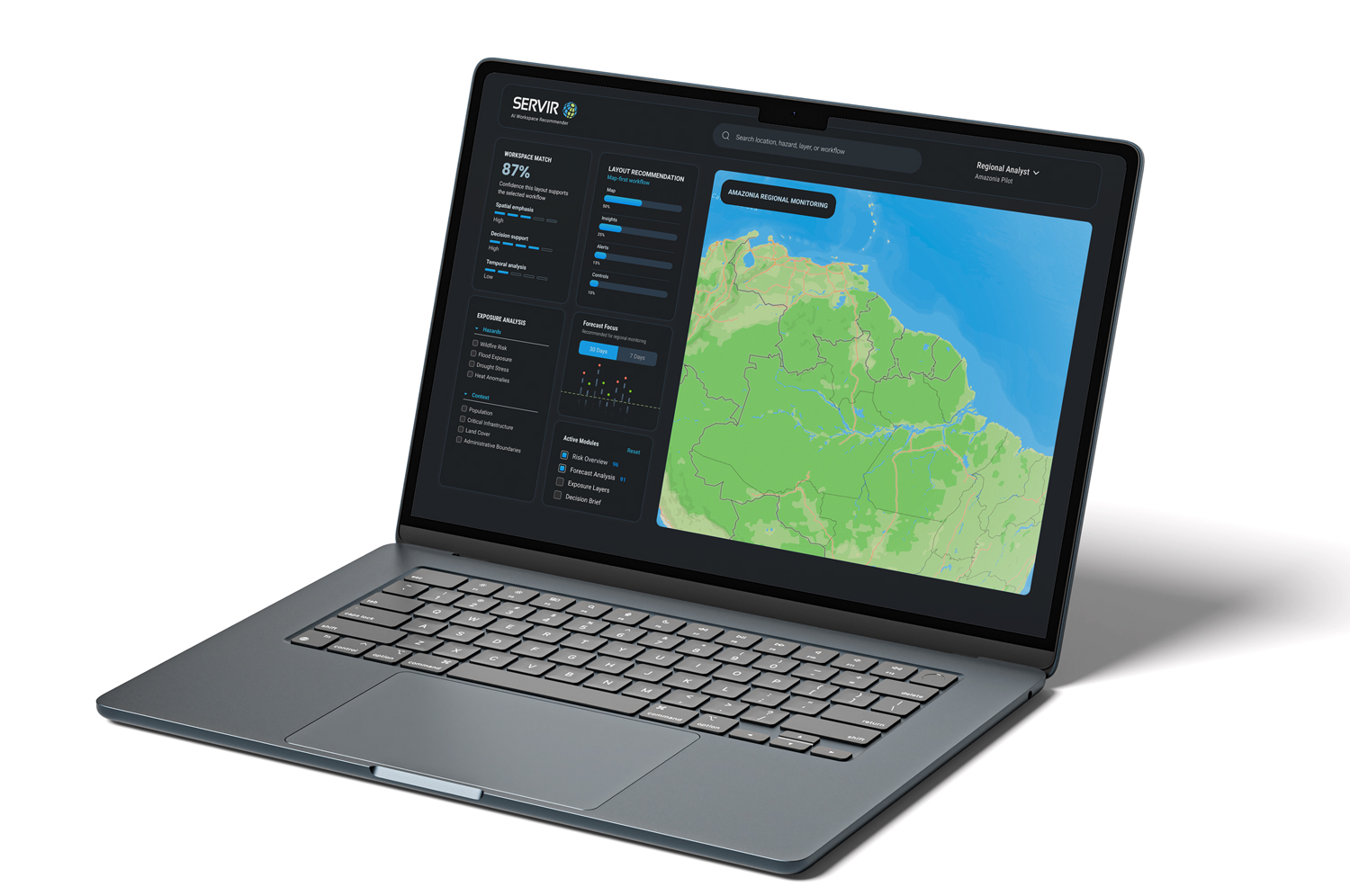
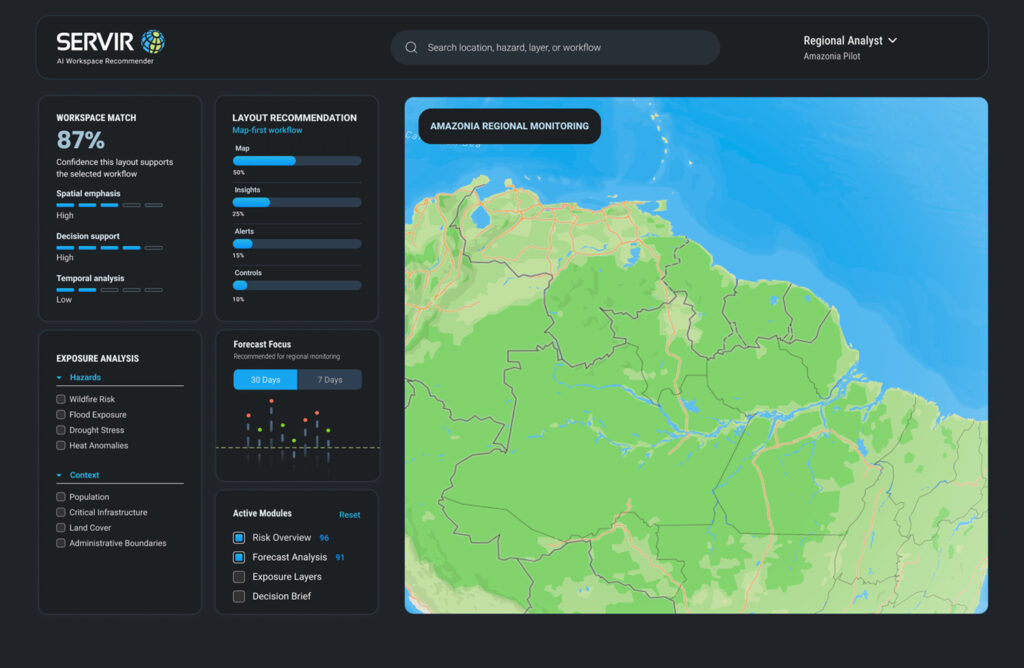
Amazonia Pilot

Hazard & exposure analysis

A region-specific workspace focused on ecological risk and decision support. The AI recommendation prioritizes hazards, contextual layers, exposure analysis, and regional monitoring needs.

Amazonia Pilot
Amazonia Pilot

Projected outcomes / intended impact

The goal is not simply to produce interfaces faster. It is to create a system that can scale knowledge, design quality, and regional decision support at the same time.

The system is designed to reduce the time between a regional question and a usable decision-support interface. By combining reusable components, AI-assisted recommendations, shared standards, and structured system logic, SERVIR could accelerate data selection, dashboard and report creation, and production across regional hubs while reducing duplicated work and implementation cost.

Faster production is only valuable if quality is preserved. The architecture also embeds rules for accessibility, evidence, citations, uncertainty, component behavior, and validation so that increased speed can be paired with stronger consistency and scientific integrity rather than simply generating more output.

AI/API Design-System Specification

AI/API DESIGN-SYSTEM SPECIFICATION

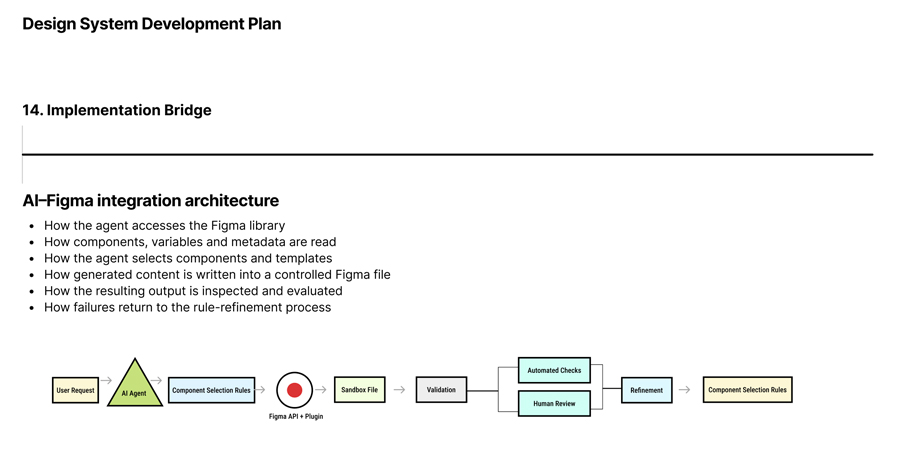
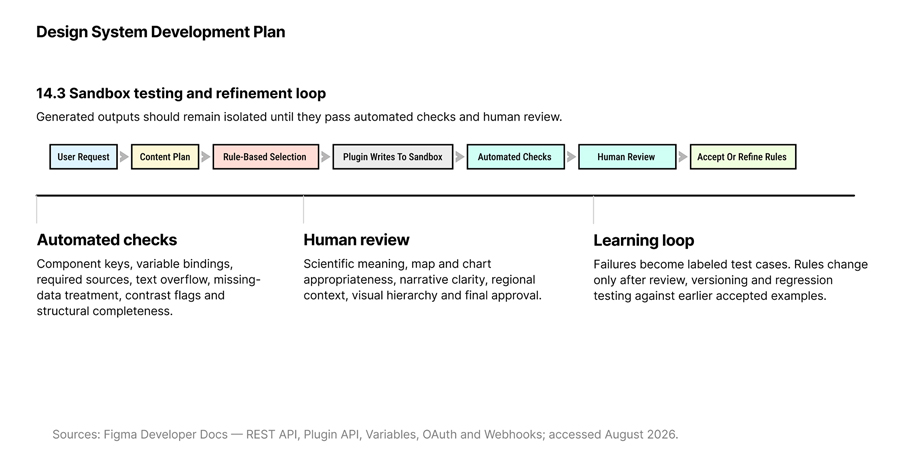
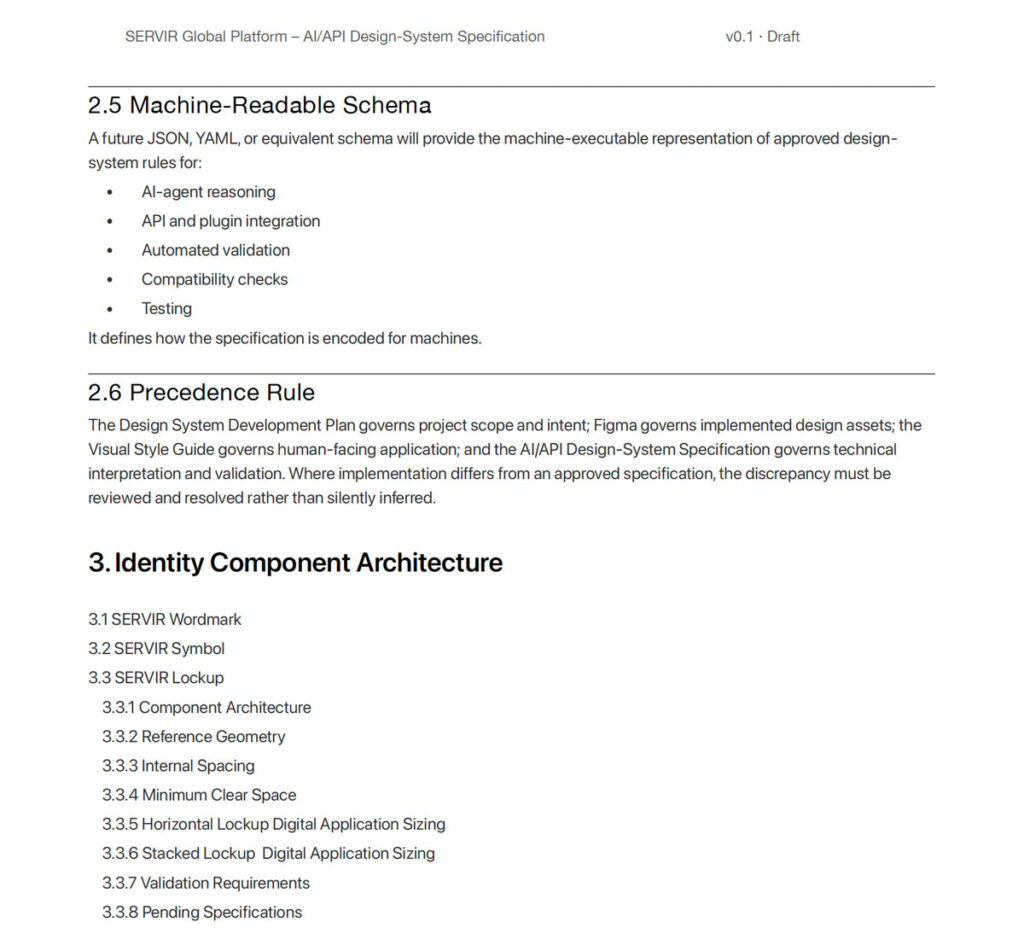
Alongside the visual and interaction system, I am developing the AI/API Design-System Specification with an AI design collaborator. The specification translates the human-facing design system into machine-readable rules for components, metadata, variables, states, accessibility, evidence requirements, API behavior, controlled execution, and validation.


Its purpose is to create the technical bridge between design intent, AI reasoning, APIs, and Figma execution—so the system can scale without losing governance or human oversight.

Project SERVIR GLOBAL AI PLATFORM

Overview

AI Workspace Recommender

role

Designing the system behind the experience.

Product Designer | UI/UX | Design Systems | AI Product Architecture.

Focus

Human–AI Interaction | Information Architecture | Figma Systems | Scientific UX

STATUS | Under development


I work across product design, UI/UX, information architecture, design-system architecture, system logic, Figma component architecture, agent-readable specifications, API integration, and controlled AI execution, translating human design intent into structured, machine readable standards for emerging AI-driven systems.

context

SERVIR is evolving from independently built regional tools toward a shared ecosystem of modular, interoperable platforms—creating the need for a common experience layer that can scale globally while preserving local relevance and scientific integrity.

Challenge

Create a scalable, AI-centered design system that connects regional workflows through shared standards, APIs, structured component logic, and machine-readable rules—without sacrificing local flexibility, accessibility, or scientific integrity.
Users

Primary users

SERVIR regional hub teams translating Earth observation and geospatial science into locally useful tools, services, and decision-support products.

Wider ecosystem

Government agencies, regional organizations, NGOs, Indigenous peoples, communities, decision-makers, private-sector partners, and households relying on trusted, locally relevant information.

RESEARCH DISCOVERY

SERVIR serves a highly diverse global network whose languages, cultures, geographies, technical needs, and goals vary by region. Research revealed the need for a system that can maintain shared standards while adapting its content, interface, and workflows to local context.

AI creates the opportunity to make that adaptability dynamic prioritizing relevant information and configuring the experience around regional conditions and objectives, with the ultimate goal of supporting faster, better-informed decisions for people and ecosystems.

System Discovery

I analyzed users, workflows, design-system architecture, scientific communication requirements, accessibility standards, Figma structure, and API constraints to define how the system must work for both humans and AI.

SERVIR Hubs user's regions

Key Insight

AI cannot reliably interpret visual design alone. Design intent must become explicit, structured, and machine-readable through rules, metadata, states, constraints, and governance.

Architecture

System Architecture

A new type of AI-enabled system requires architecture that treats capabilities, constraints, standards, and implementation as part of the design problem from the beginning. I map the requirements connecting the design system, APIs, AI reasoning, accessibility, and governance into a controlled execution model.

Human Architecture

On the human side, the architecture is designed to turn that complexity into an interface people can easily understand, configure, and adapt—giving regional teams meaningful control while AI assists with recommendations, structure, and execution.

Design System

Every component must communicate with both a human and a machine.

Designers need visual guidance, recognizable patterns, and understandable rules. AI systems need structured naming, metadata, properties, constraints, and predictable relationships. I designed both layers together so they remain manifestations of the same source of truth.

Human-ready design system

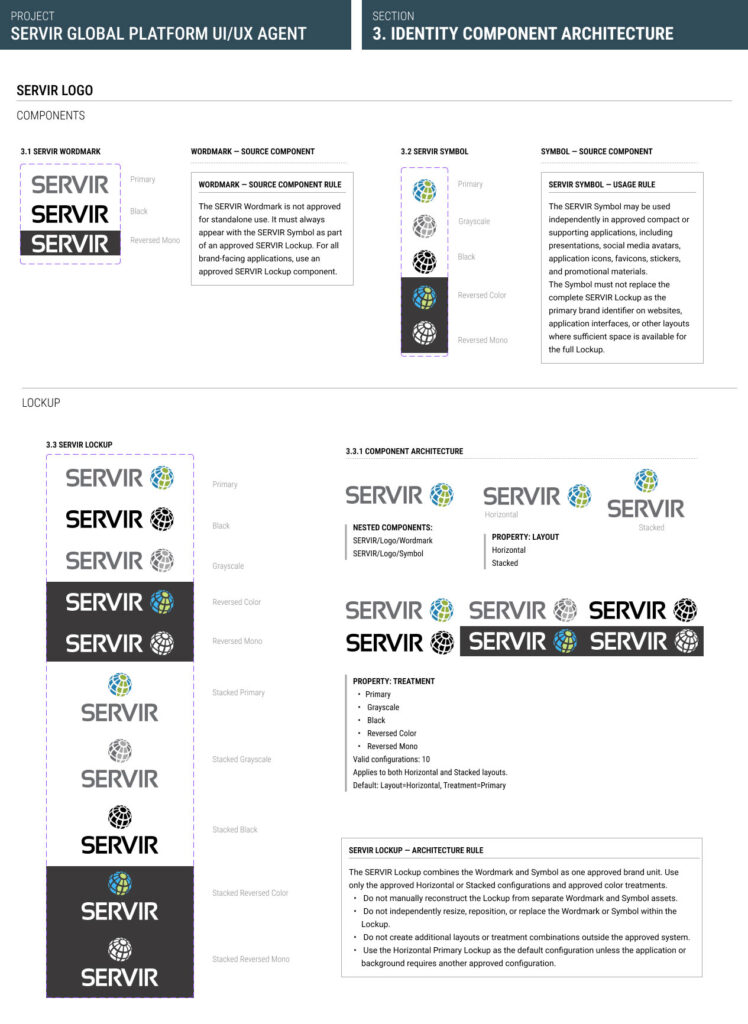
Visual standards translate brand decisions into reusable components, responsive rules, approved configurations, and clear implementation guidance.
SERVIR Human-ready design system

Machine-ready architecture

The same visual system is translated into explicit properties, geometry, relationships, constraints, and implementation rules that can be interpreted programmatically.
Machine-ready architecture

Agent-readable component metadata

Component intelligence is embedded directly into the design system through structured IDs, purpose, defaults, variants, constraints, geometry, and usage rules, giving AI structured information beyond the visual object itself.

Agent-readable component metadata

Naming as system architecture

Hierarchical component names and controlled variant terminology create predictable relationships for designers, developers, APIs, and AI-assisted workflows.
Naming as system architecture

Implementation

AI Workspace Recommender

The implementation explores how the design system, AI logic, and regional requirements translate into adaptive interface configurations. Rather than creating one fixed dashboard, I developed prototype directions that demonstrate how the system could recommend layouts, modules, and data priorities based on regional context and workflow goals.

Europe Pilot

Balanced regional monitoring

A light interface exploring a clear, accessible workspace for broad regional analysis. The AI recommendation emphasizes map visibility, decision clarity, and multi-layer monitoring.

Europe Pilot
Europe Pilot

Asia Pilot

High-contrast regional monitoring

A dark interface designed for sustained analysis across a large geographic area. The layout keeps the map dominant while giving analysts quick access to forecast focus, active modules, and priority layers.

Asia Pilot
Asia Pilot

Amazonia Pilot

Hazard & exposure analysis

A region-specific workspace focused on ecological risk and decision support. The AI recommendation prioritizes hazards, contextual layers, exposure analysis, and regional monitoring needs.

Amazonia Pilot
Amazonia Pilot

Projected outcomes / intended impact

The goal is not simply to produce interfaces faster. It is to create a system that can scale knowledge, design quality, and regional decision support at the same time.

The system is designed to reduce the time between a regional question and a usable decision-support interface. By combining reusable components, AI-assisted recommendations, shared standards, and structured system logic, SERVIR could accelerate data selection, dashboard and report creation, and production across regional hubs while reducing duplicated work and implementation cost.

Faster production is only valuable if quality is preserved. The architecture also embeds rules for accessibility, evidence, citations, uncertainty, component behavior, and validation so that increased speed can be paired with stronger consistency and scientific integrity rather than simply generating more output.

AI/API Design-System Specification

AI/API DESIGN-SYSTEM SPECIFICATION

Alongside the visual and interaction system, I am developing the AI/API Design-System Specification with an AI design collaborator. The specification translates the human-facing design system into machine-readable rules for components, metadata, variables, states, accessibility, evidence requirements, API behavior, controlled execution, and validation.

Its purpose is to create the technical bridge between design intent, AI reasoning, APIs, and Figma execution—so the system can scale without losing governance or human oversight.