Case Study 1

BehavePlus 7 Redesigning wildfire modeling software to reduce complexity and improve accessibility

ROLE Product Designer

USERS Wildfire management professionals · Incident support teams · Researchers · Educators

FOCUS UX redesign · Workflow simplification · Interaction design

TOOLS UX redesign · Workflow simplification · Interaction design

Outcome Reduced learning curve from three university-level courses to one

Understanding the Problem​

BehavePlus is an open source wildfire behavior modeling system used to predict fire behavior across multiple scenarios. The software runs on Windows, macOS, and Linux and relies on Java-based environments to execute its scientific models. It is widely recognized as one of the standard tools used in wildfire management, research, and training worldwide.

While scientifically powerful, the interface exposed much of this complexity directly to users through numerous modules, parameters, and calculation paths. As a result, operating the software often required extensive training, creating a significant barrier for new users.

This phase focused on identifying where the interface introduced unnecessary cognitive load, simplifying module dependencies, and translating the system architecture into clearer interactions, while preserving the scientific rigor of the model.

System Architecture

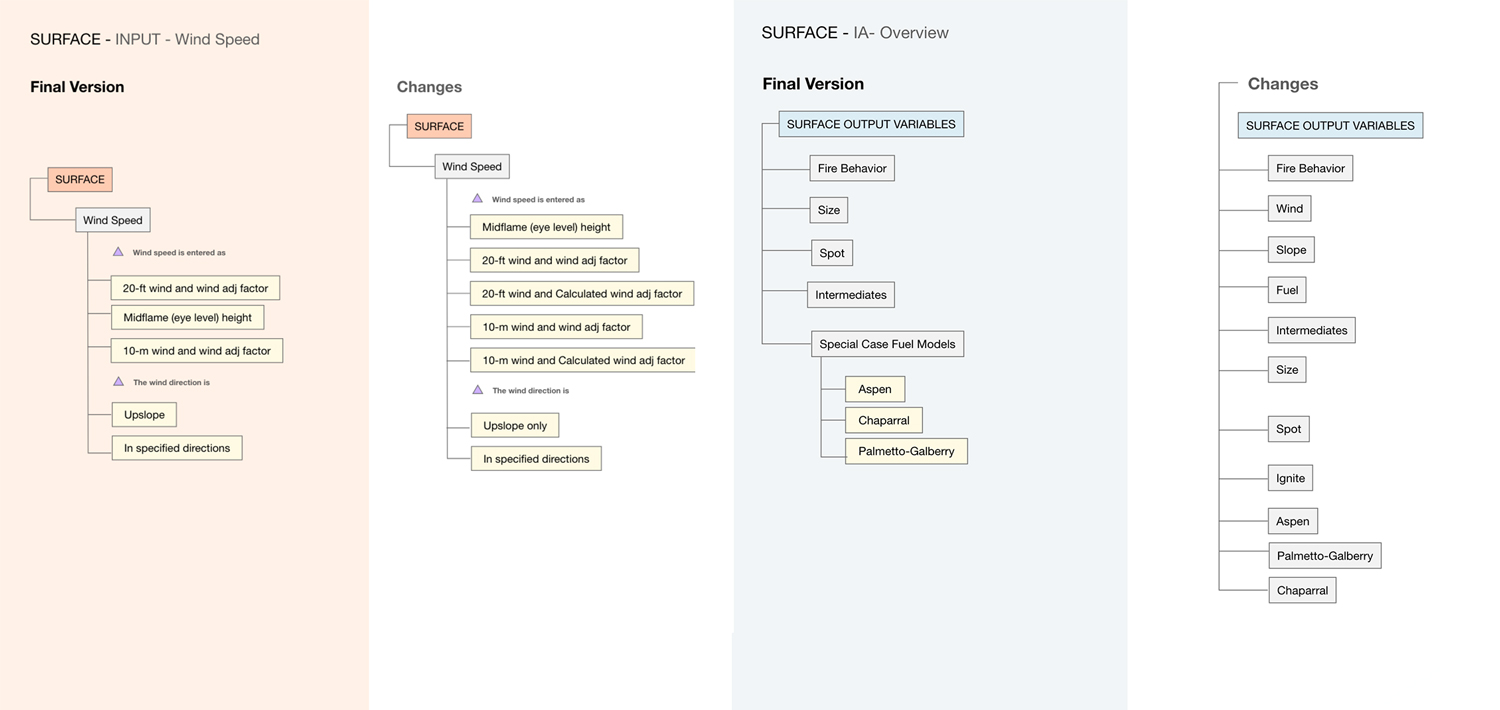
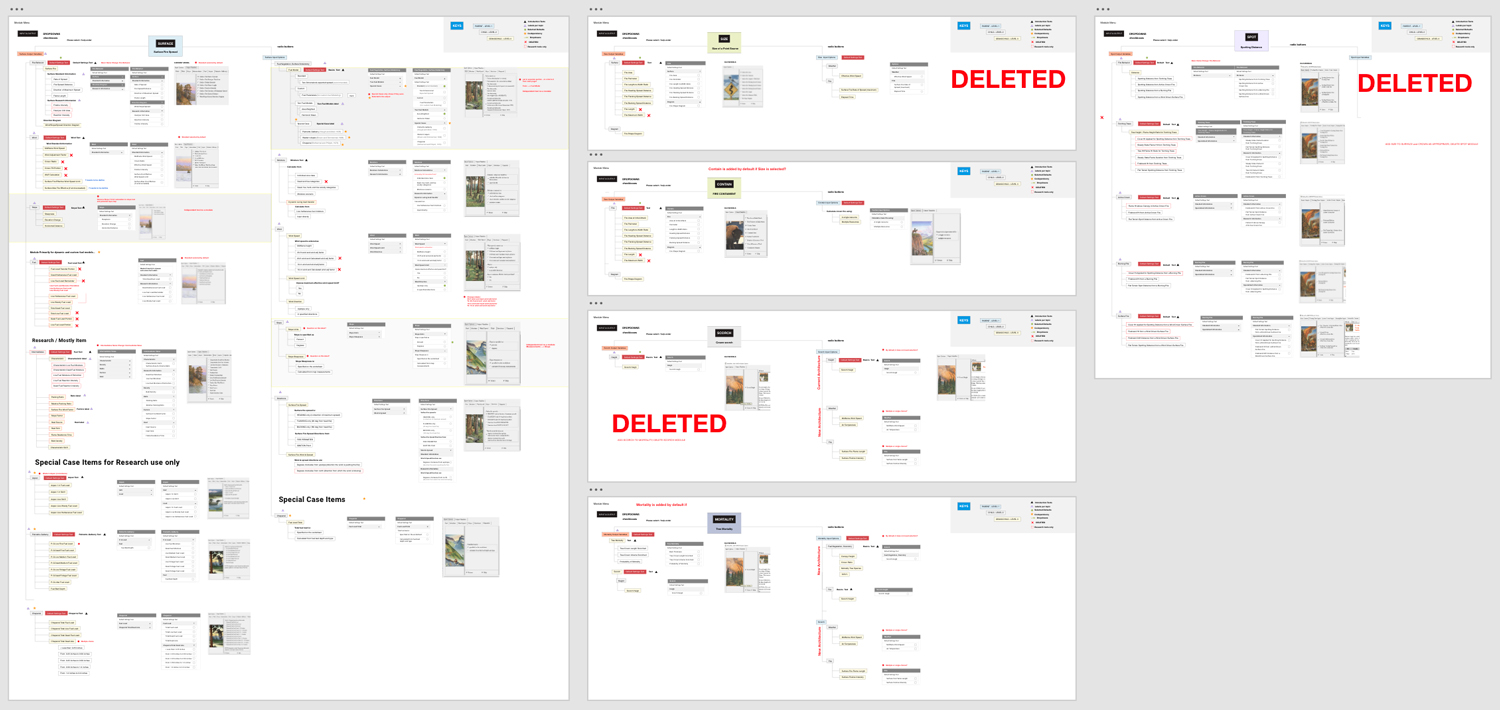
System architecture analysis revealed that the interface mirrored the internal scientific model rather than the mental models of its users.

BehavePlus 7 Interface architecture and workflow mapping used to identify complexity and redundant interaction paths
Mapping module relationships and calculation dependencies in the BehavePlus modeling system

Who are BehavePlus users?

BehavePlus is used by a specialized group of wildfire professionals including fire analysts, incident support teams, land managers, prescribed fire specialists, researchers, and educators.

These users operate in high-stakes environments where fire behavior modeling supports both real-time incident response and long-term planning. As a result, the software must support complex scientific analysis while remaining practical for operational decision-making.

Main users group

1

Fire Analyst Near term (1-3 days window)

2

Division Supervisor

3
Prescribed Fire Burn Boss Type 1 & 2 (RXB2)
4
Firefighter Type 1 & 2
5

Hazard Mitigation, researchers, education

How they use BehavePlus?

Active Wildfire Incident
Projecting the Behavior of an Ongoing Fire
Incident Support
Assessing Fuel Hazard
PLANNING - PREVENTION
Planning Prescribed Fire

User Research That Shaped the Design Strategy

Before developing the new interface, I conducted user research with experienced BehavePlus users from federal agencies, state forestry organizations, and research institutions.

A total of 66 participants contributed feedback through surveys, workshops, and discussions about workflows, usability, and learning challenges.

Most participants had extensive operational experience using the software, ensuring that the findings reflected real-world field conditions and decision-making environments.

Participants

42%
US Forest Service
US Forest Service seal
10.8%
The Nature Conservancy
6.2%
CAL FIRE
California Department of Forestry and Fire Protection
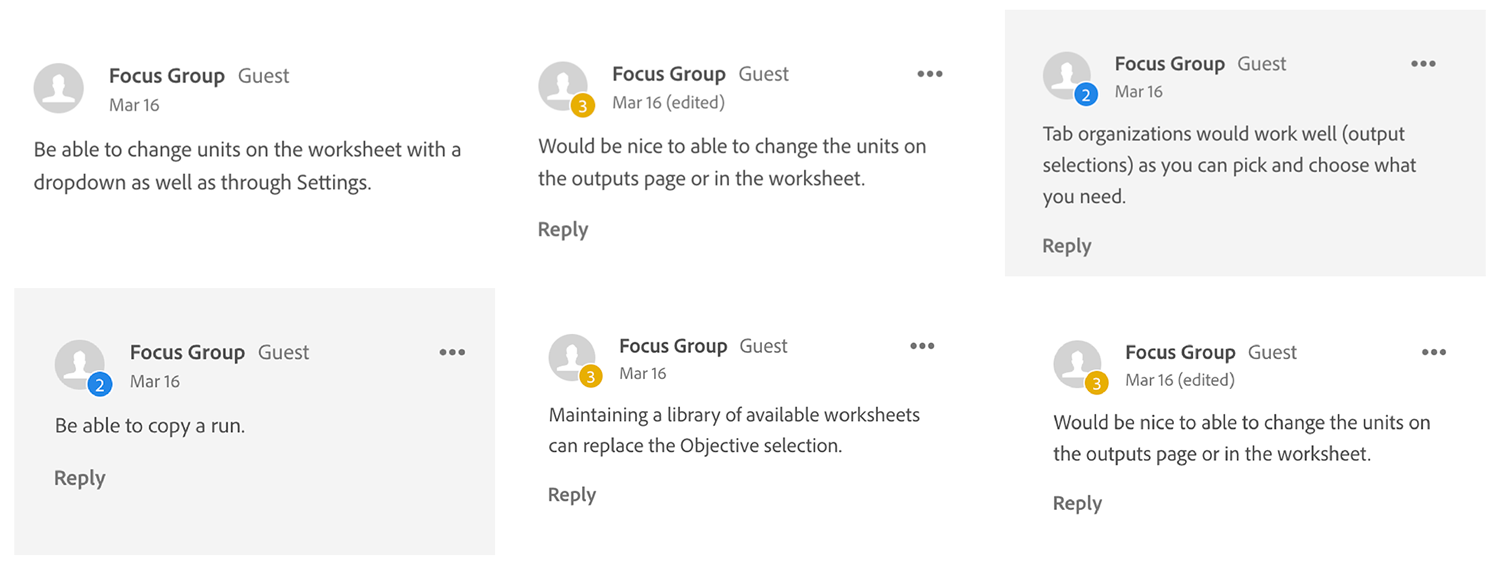
The wishlist revealed two key insights: users valued the scientific power of the system, but needed simpler workflows and more accessible controls.
Focus Group wishlist

User Research That Shaped the Design Strategy

To better understand how wildfire professionals interact with BehavePlus, I conducted an initial user research study combining surveys and focus group discussions. The goal was to identify usability challenges, understand the experience level of the user base, and uncover opportunities to simplify workflows while maintaining the scientific rigor of the system.

The study gathered 66 responses from wildfire professionals, researchers, and educators, providing insight into both experienced users and those newer to the software.

Participants

The wishlist revealed two key insights: users valued the scientific power of the system, but needed simpler workflows and more accessible controls.